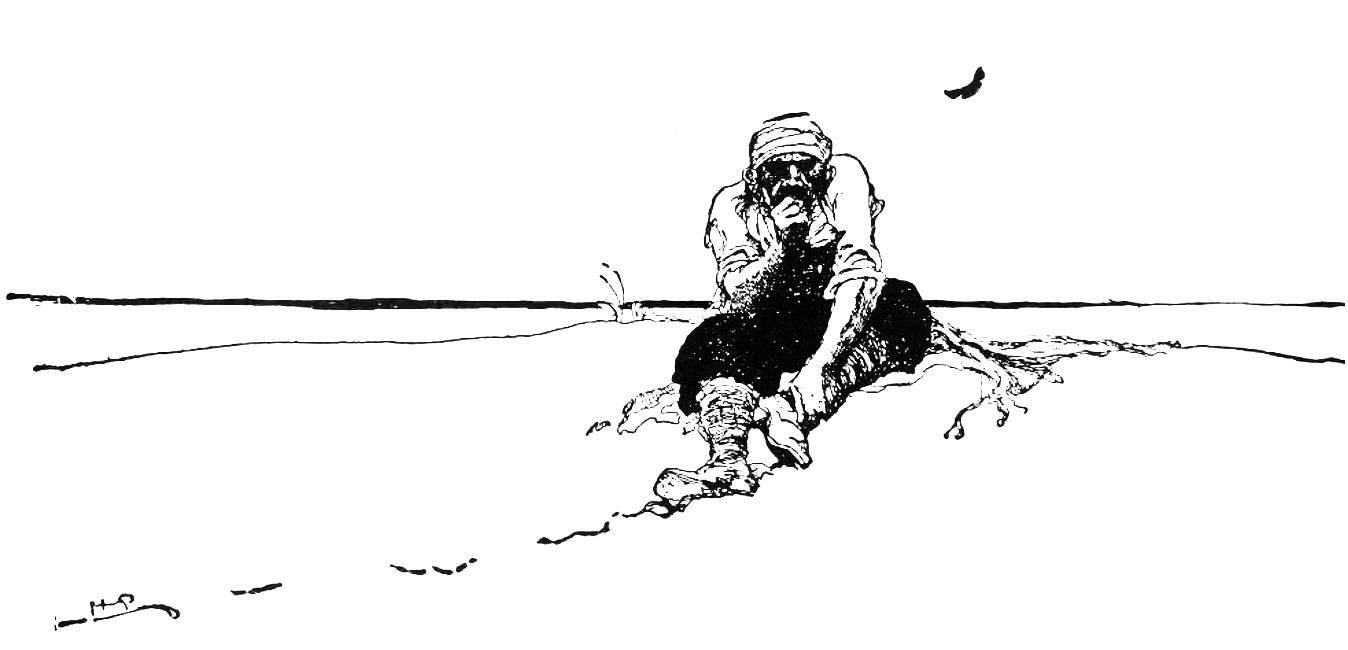
Going to Navigation School
A landlubber's guide to avoid getting lost at sea!

This week has been all about trying to understand better the geography and navigational processes of mariners and pirates in the 1700s. But first…
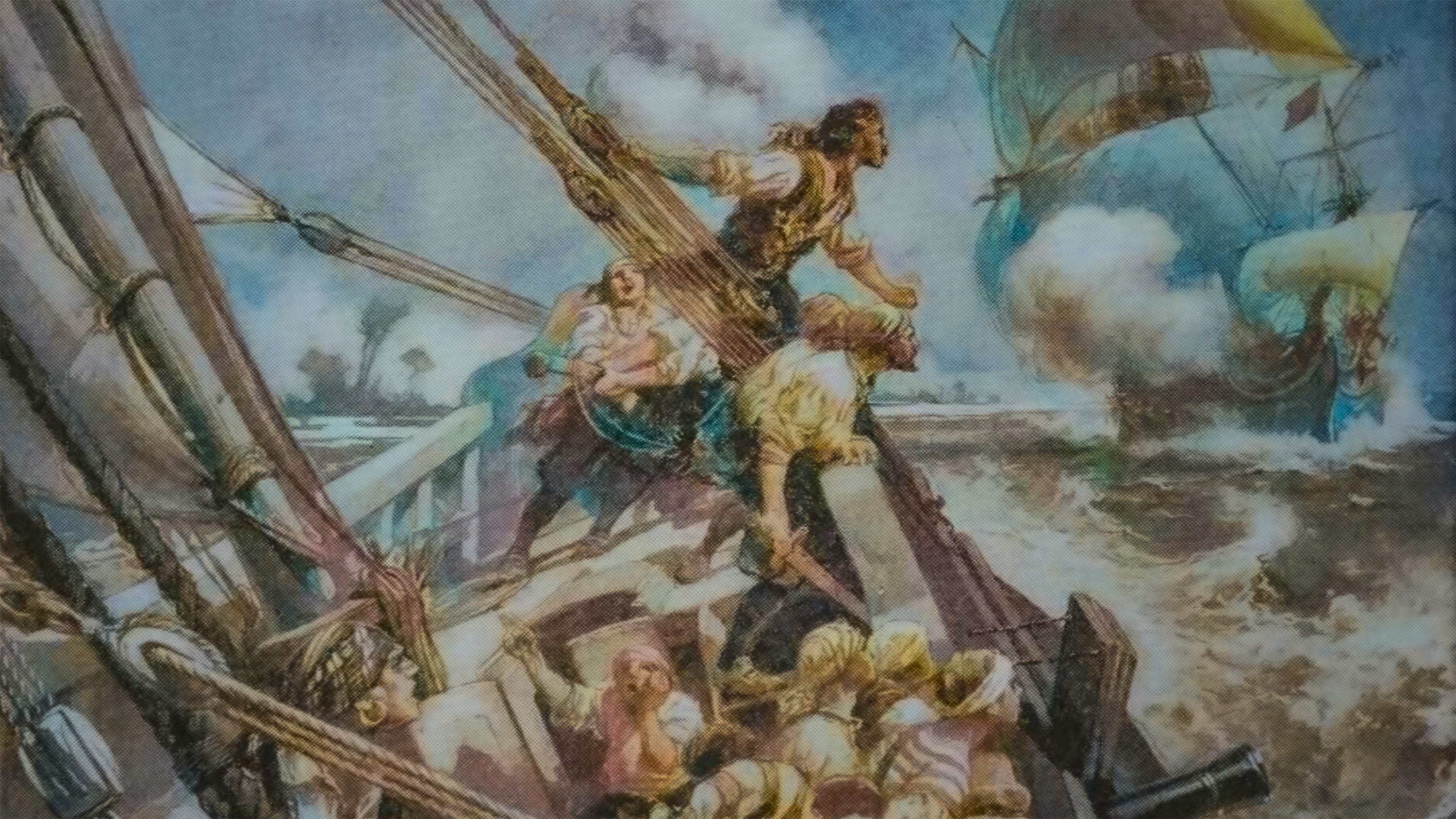
THE HOTSHEET
This last week has been all about researching the manuals used by Captains and other officers to learn the process and successfully navigate the oceans in the early 18th Century.
Two experts in various areas of pirate research reached out to me and may collaborate on the project and guest contribute to the substack soon. More information to come.
MUSINGS
This week's article will be short and sweet, as life, spring break, and other new opportunities have taken up much of my time.
I hope that these articles might act as a partial escape to the general chaos of the outside world and provide even the tiniest escape for all you readers out there.
As I’ve been working on the various aspects of research and analyzing A General History of the Pyrates and other older texts in more detail, it became all too clear how little I understood the geography I was reading about. I found myself time after time trying to figure out where this bay or that island was in relation to the hundreds of locations referenced in what I was reading, and it led me to discover a library of period manuals, educational texts, and other navigational reference material that the mariners of the time relied on.
The first and most important of these was a series of four navigation manuals called Seller’s English Pilot. (Book 1, Book 2, Book 3, and Book 4) Born in 1632, Seller was a compass and map maker, later appointed Hydrographer to King Charles II in 1671. His four volumes of the English Pilot included detailed charts, navigational information, and landmass identification diagrams for the entire known world.


Seller’s other work included instructional manuals for those wishing to learn the trade, covering everything from basic arithmetic, ship maintenance, astronomy, and trigonometry to gunnery at sea.
Practical Navigation 1718 The Sea Gunner 1691


These are all highly informative, but as I began to explore them, I realized I needed something even simpler, like the instructional manuals mentioned in books like C.S. Forester’s Horatio Hornblower series, as being used to educate young midshipmen (a.k.a. children shipped off to sea).
Basically, I needed to find myself an Idiot’s Guide to being an old-timey sailor.
The earliest I’ve found dates to 1670 with Sir Henry Manwaring’s Sea-man’s Dictionary. This is just like it sounds, a massive list of terms and brief definitions. Helpful, but oh so dry.
It seemed like dictionaries were all I was going to find for the rest of the century culminating with the more widely known 1780 release of William Falconer’s An universal dictionary of the marine: or, A copious explanation of the technical terms and phrases employed in the construction, equipment, furniture, machinery, movements, and military operations of a ship, in later editions simplified to Falconer’s An Universal Dictionary of the Marine.
I finally found something closer to what I was looking for, but ventured more than 100 years to around the time of the American Civil War to find something closer to what I was looking for with R.H. Dana’s The Seaman’s Manual in 1841. This is the one I have found the most helpful as an instructional tool, as unlike the previously mentioned manuals, it includes far more visual reference materials. It is written in a way designed to instruct laymen like myself.


If anyone has found a similar manual released in the 1700s, I would be very interested in reviewing it and sharing it here.
I have included as many direct links to the materials as I could and hope you will find all this as informative, eye-opening, and headscratchingly complex as I do!
Okay, I’m off to figure out what the hell Solar Declination is. Wish me luck!
Help support the project!
Though we are only accepting pledges for future paid tiers in the substack please consider supporting us now at the link below

The Pirate Project is a multi-media experience that investigates the history of 18th Century Pirates using 21st Century forensic technologies launching later in 2025.
Jonathan Pezza is a multi-award-winning writer, filmmaker and podcaster living in Los Angeles, California. To listen to some of his other work in fiction, please visit linktr.ee/cmanthology

The Knightville Workshop produces and distributes cutting-edge immersive audio and transmedia content designed for tomorrow’s audiences.
©Knightsville Workshop 2025